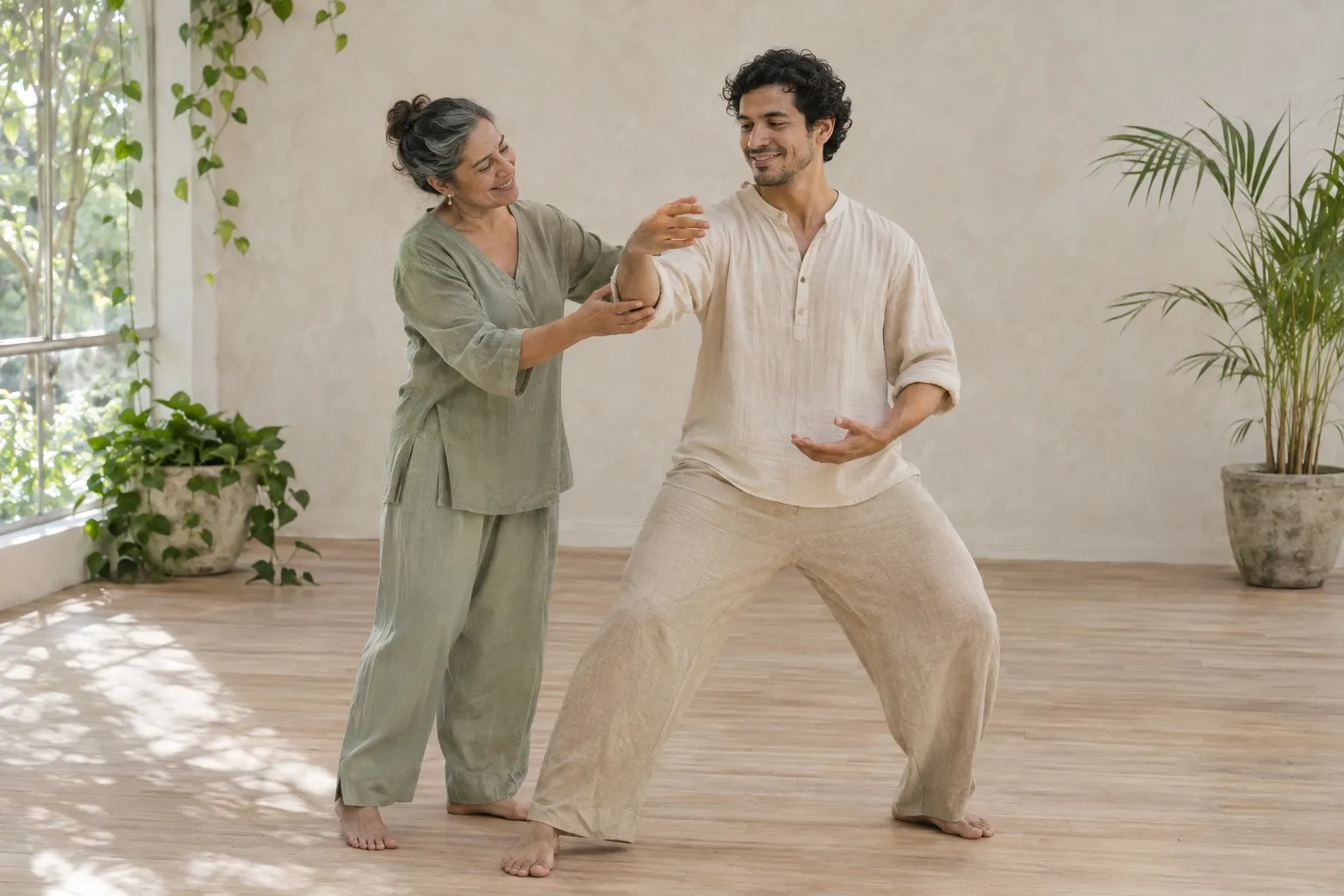
Balance and breathing
Learn to move slowly.
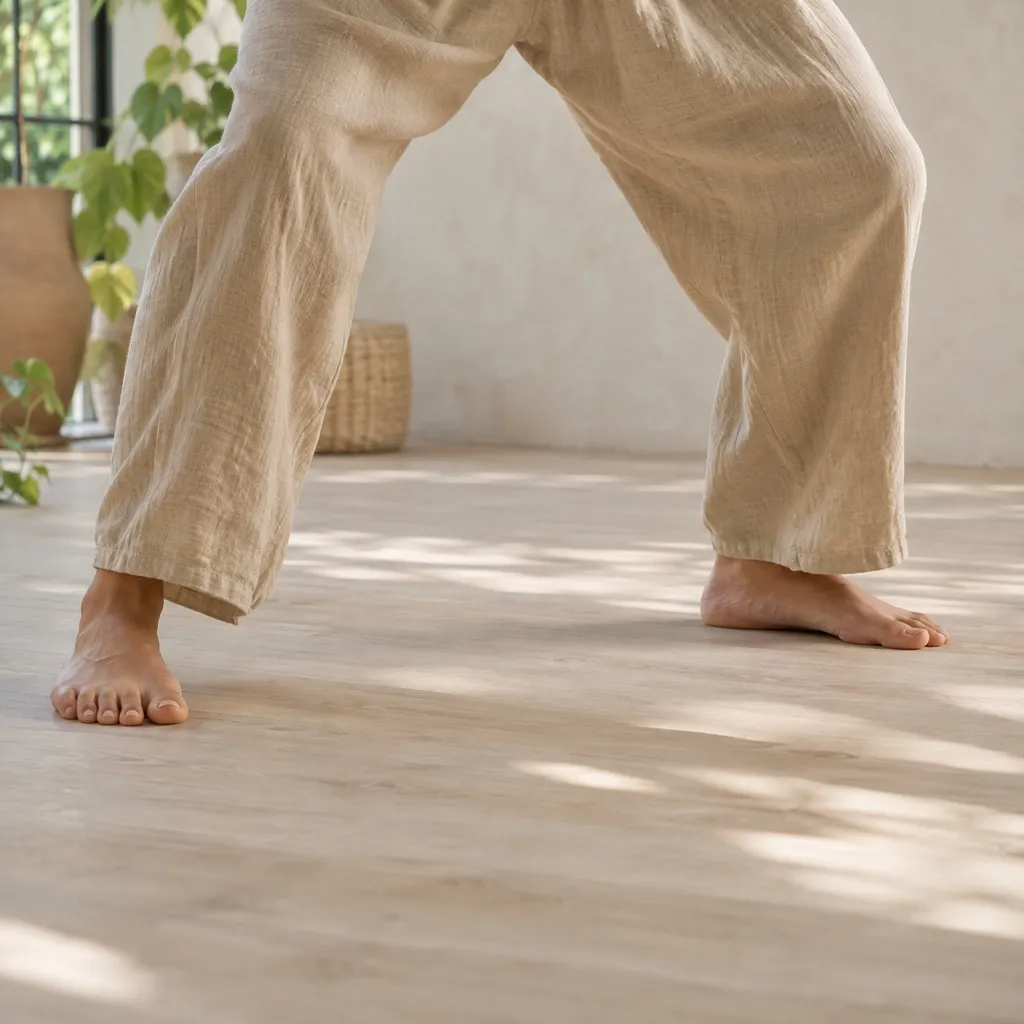
Feel the support of your feet and shift your weight from side to side with attention. Explore slow movements and let your breathing accompany what you do.
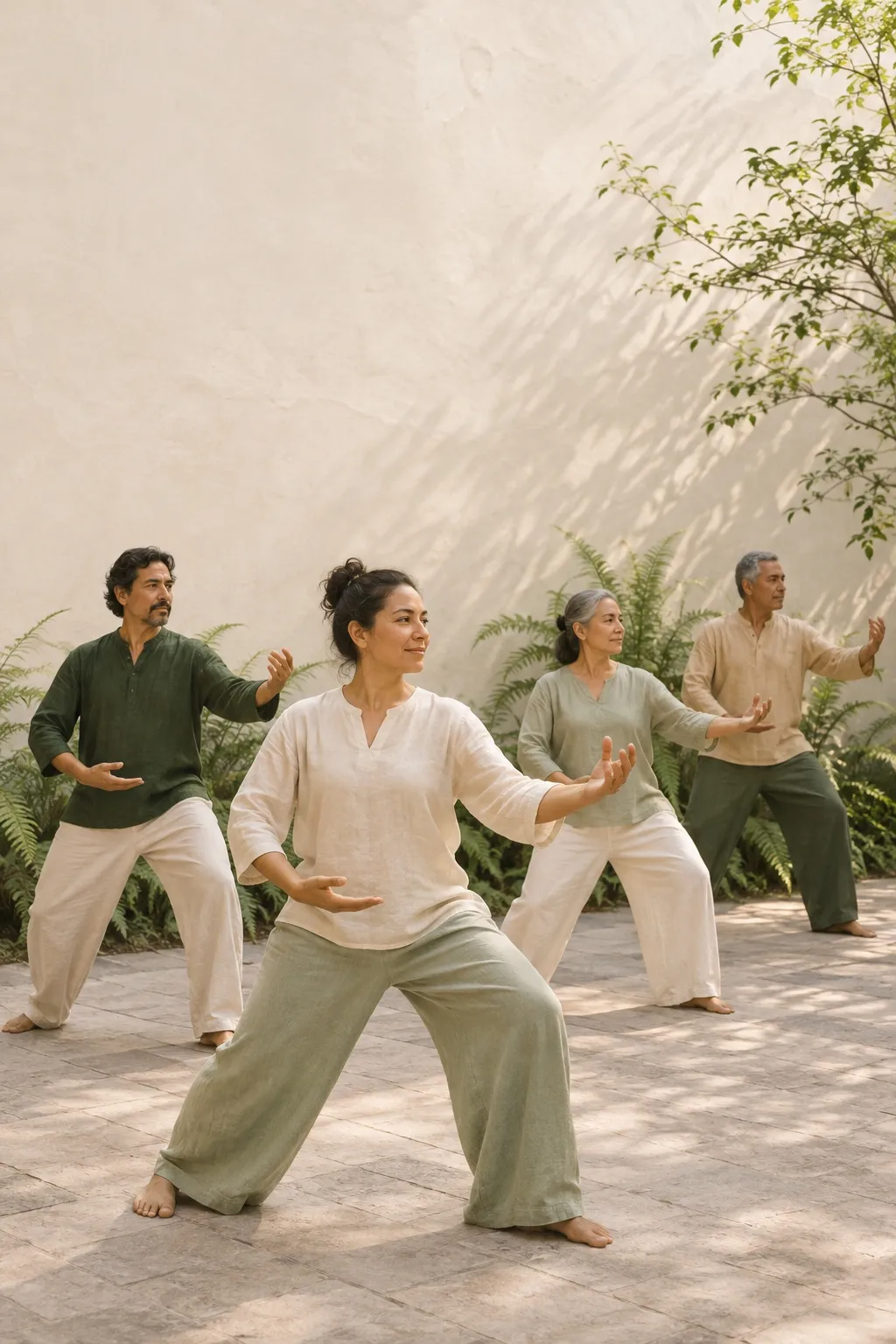
What it is
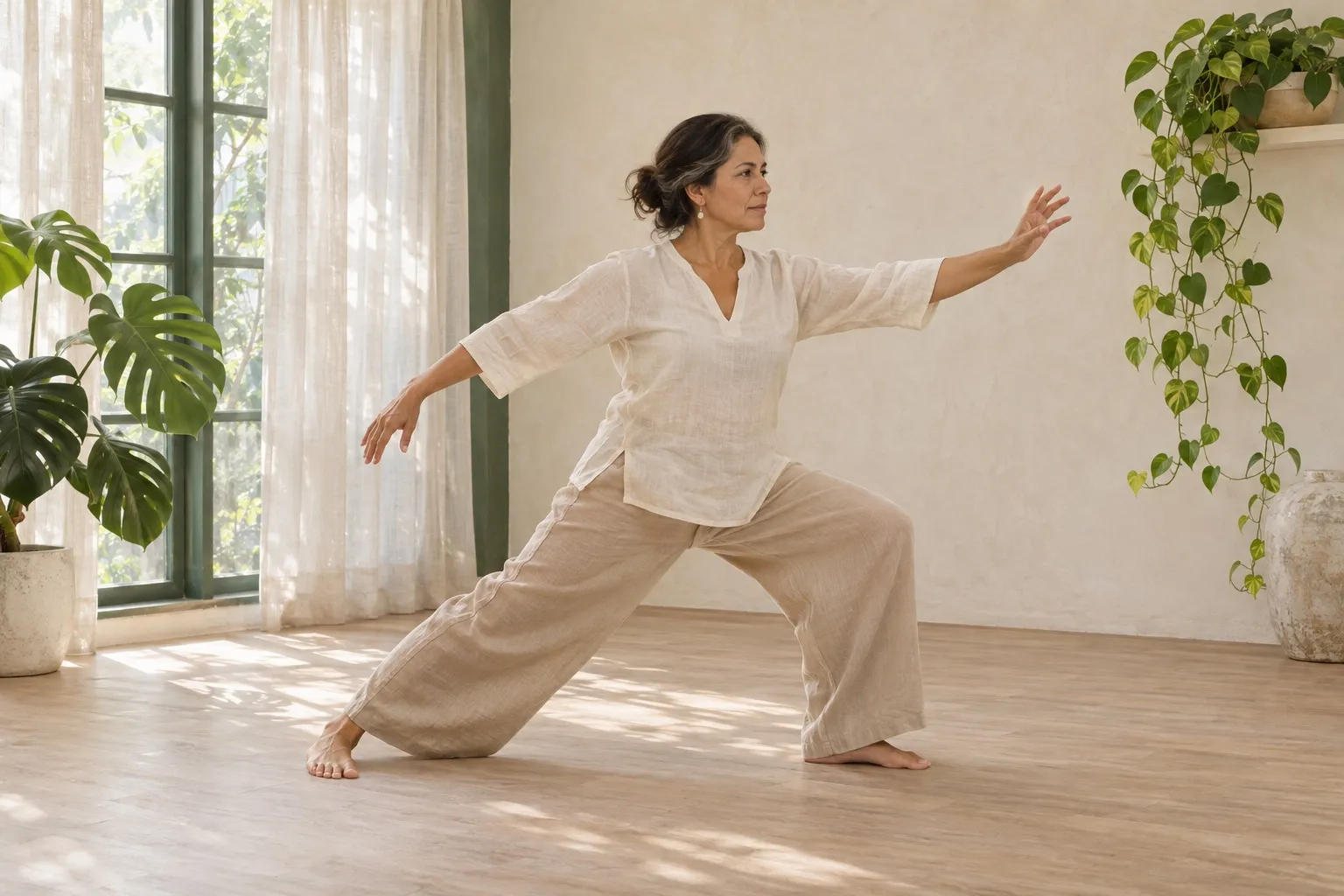
Tai chi: one movement leads to the next
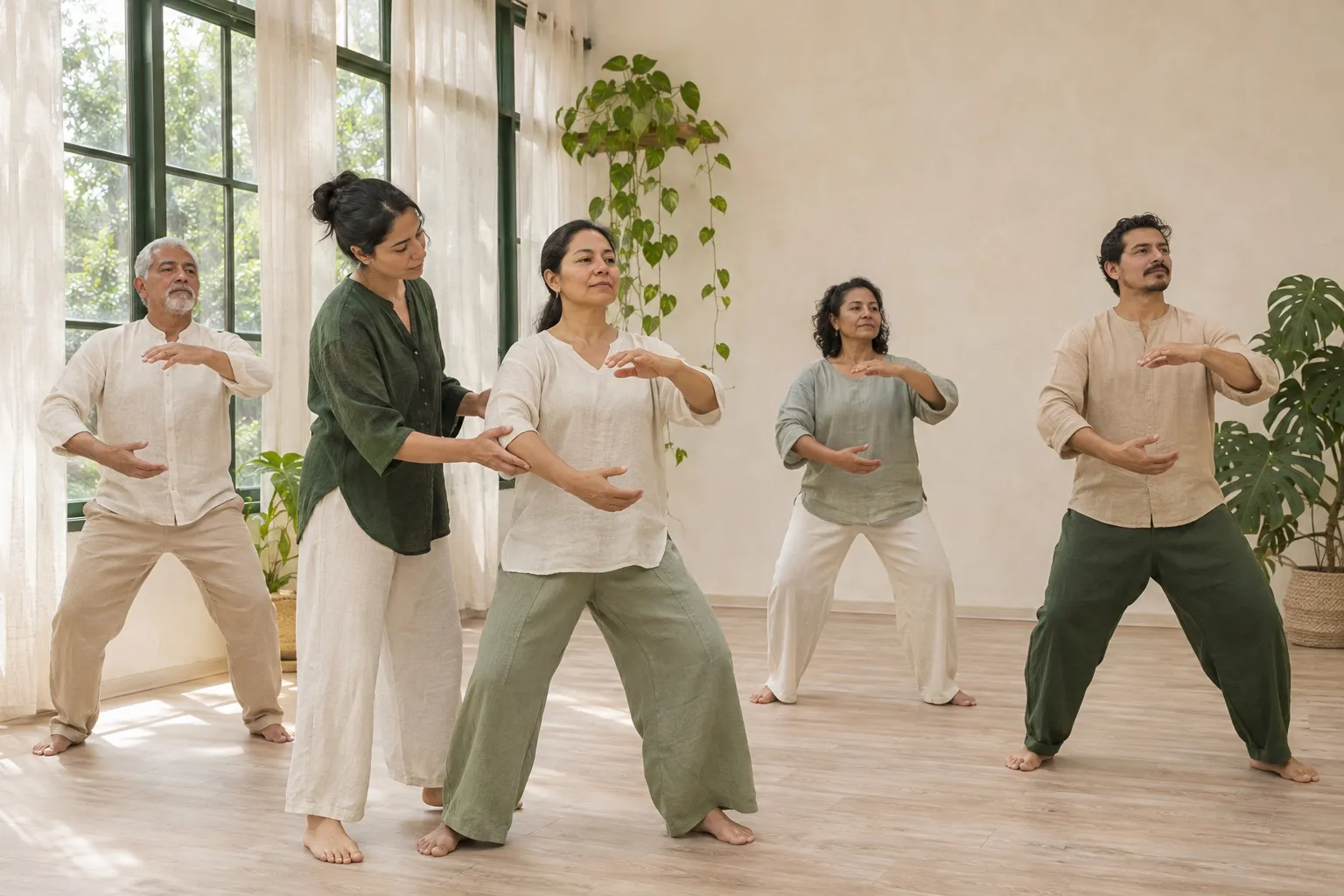
In tai chi, you link slow movements into a sequence. As you go, you observe how your posture changes, where you place your feet, and how you shift your weight from one leg to the other. You can pay attention to each transition, without rushing to the next movement.
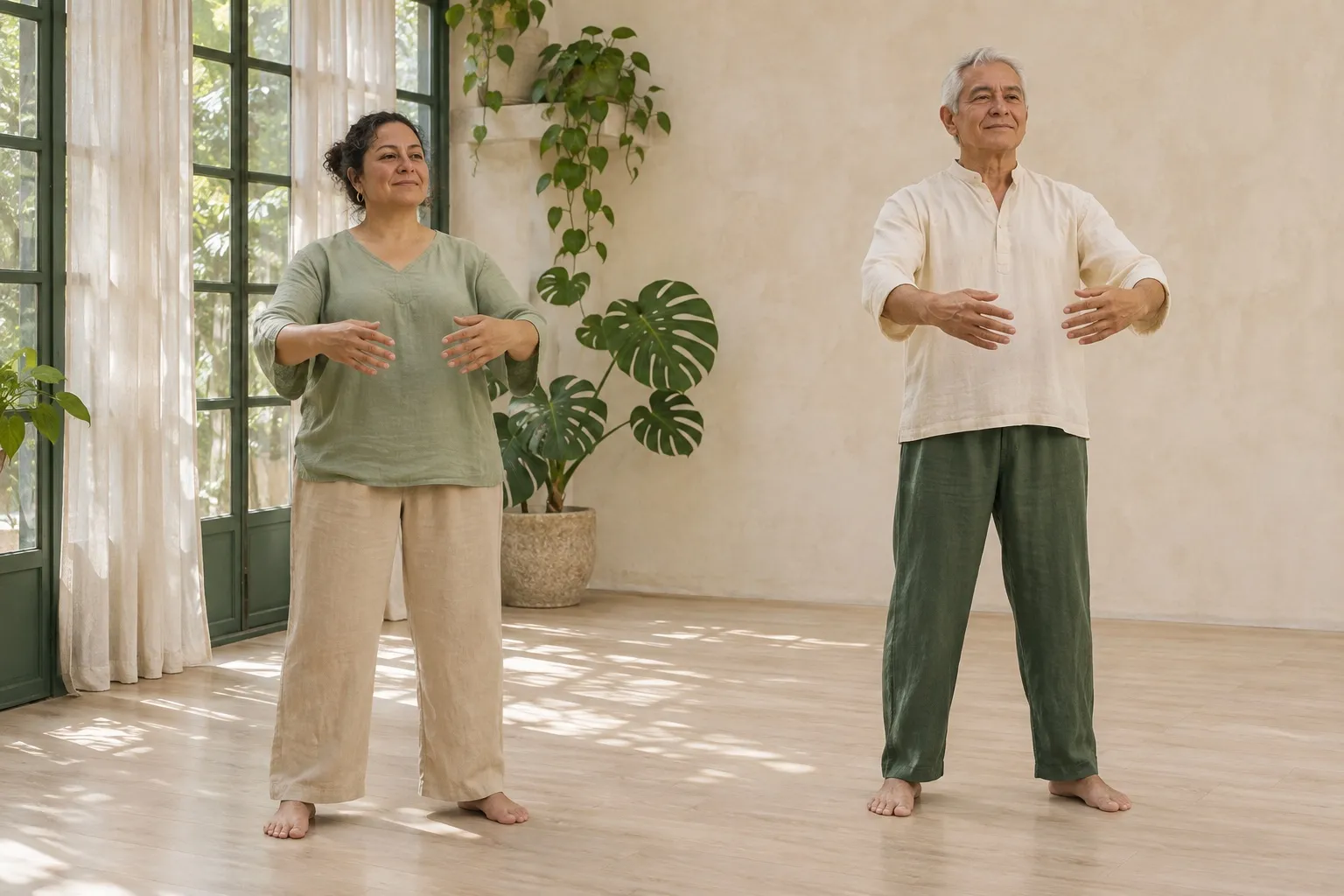
Qi gong: repetition as a way to pay attention
In qi gong, you repeat simple movements and accompany them with your breathing. You raise and lower your arms, relax your shoulders, and notice what changes as you repeat the same movement. Repetition gives you space to feel the movement without having to remember a long sequence.
What you'll practice
Preparing your joints
Gently move your shoulders, wrists, hips, and ankles. Notice how your body feels as you begin.
A sequence, step by step
Explore one movement and then the next. Pay attention to the support of your feet and the shift in weight between steps.
Breathing with movement
Notice the rhythm of your breathing as you open your arms and bring them back in. Find a way to move that you can follow without rushing.
Ending in stillness
Pause when you finish. Feel your feet in contact with the floor and observe your breathing without trying to change it.
Who it's for
You can try this practice if you want to take a moment to feel how you move. Here are a few starting points for exploring it:
- You’re interested in observing your posture and how you distribute your weight as you walk.
- You want to practice slow movements and pay attention to your breathing.
- You’re looking to pause during your day and reconnect with how your body feels.
How to practice it
Check the calendar to see which formats are available for this practice on each date.
In-person classes
Practice in a group, with someone to guide you through each movement.
Online programs
Join live sessions or choose a program you can follow at your own pace.
Workshops
Spend one or several days exploring a topic and putting it into practice.
Gatherings
Share questions and experiences with specialists and others interested in wellbeing.
Frequently asked questions
Do I need experience?
No. You can start from scratch: each practice is explained step by step.
What should I wear?
Choose comfortable clothing that lets you move your arms, bend your knees, and take a step without feeling restricted.
How long is a class?
It depends on the format: a class, an online program, or a workshop. We’ll confirm the length when you book.
Can I practice with an injury?
Tell us about your injury when you book so we can explain which movements the session includes and whether they should be adapted. If you’re receiving treatment, check with your doctor first.
What’s the difference between tai chi and qi gong?
In tai chi, you link movements into a sequence and pay attention to transitions and shifts in weight. In qi gong, you usually repeat simpler movements accompanied by your breathing. In both practices, you can observe your posture and move with attention.
Can I start online?
Yes, when a tai chi or qi gong online program is on the calendar. You only need a device with internet access and enough space to take a step in each direction.
How do I choose a format?
Consider whether you’d prefer to share a space in person or practice from wherever you are, and what topic you want to explore. Check the calendar for dates and formats; if you have questions, send us a message before booking.
Make room for your first session.
Choose what you would like to practice and find a date that works for you.